
Abia State government has faced growing scrutiny over the management and disclosure of funds allocated for smart school development in recent weeks. The controversy emerged from conflicting figures published by the government in its budgetary estimates and performance reports for 2024. The publication suggest that 58 billion naira was allocated for the development of 51 schools, making dissenting voices argue that such infrastructural achievements were nowhere to be found across the state. In contrast, the governor’s recent press briefing claimed that the figure of 58 billion represents mere budgetary projections, asserting that in reality only 4.1 billion naira had been spent,without identifying the beneficiary schools. This disparity, combined with the apparent lack of visible smart school projects, is troubling and raises important questions about accountability, transparency, and good governance.

A fundamental pillar of democratic governance is accountability. The public must be able to verify that public funds are managed with utmost transparency and that state resources are directed towards intended developmental objectives. In the case of Abia State, the dissonance between the published financial estimates and the actual visible projects fosters an atmosphere of mistrust. When the government’s claims of infrastructural investments do not match what citizens can observe—especially in a state with 17 local government councils,it undermines public confidence and perpetuates suspicions of mismanagement.
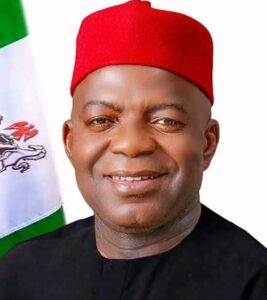
For a democracy to thrive, robust due process and openness in governance are essential. Citizens deserve detailed, verifiable reports on how funds are appropriated and spent. The lack of clarity in identifying which schools have received investments, as well as the ambiguity surrounding the actual financial outlay, diminishes the credibility of government communications. This situation is further compounded by the heavy reliance on propaganda by the current administration. While visible projects, such as road constructions and selective renovations like that at School Road Primary School in Umuahia, may give an impression of progress, these projects can be used to distract less visible but equally important developmental needs. Propaganda, when not balanced by demonstrable transparency, rarely leads to substantive progress instead, it can create a veneer of development that masks inefficiencies or misappropriations.
Furthermore, the present scenario highlights the dangers of relinquishing emphasis on transparency in the wake of citizen desperation for development. Many Abians appear willing to endorse the current regime, possibly spurred by a sense of practical optimism after 24 years of perceived failure by past administrations. However, the willingness of the people to overlook accountability in favor of visible projects might inadvertently pave the way toward an autocratic style of governance. When citizens become passive recipients of top-down announcements without active participation in scrutinizing public finances, the checks and balances that underpin a vibrant democracy begin to erode.
An accountable government is one that not only implements projects but also invites and facilitates public oversight. This means establishing clear communication channels that detail how, when, and where funds are being spent. Mechanisms such as a transparent disclosure of financial transactions are indispensable for ensuring that governments remain answerable to their citizens.

The situation in Abia State also serves as a cautionary tale in a broader context. Commitment to good governance is not just about achieving visible developmental milestones; it is equally about adhering to principles of integrity and accountability. When leadership fails to provide clarity and substantive evidence of how public funds are utilized, it undermines the citizens right to be informed and their ability to demand responsible governance. In the long run, such practices can lead to systemic corruption, mismanagement of resources, and a loss of public trust in political institutions. Which is like going back to the past years of “maladministration”.
It is imperative for both the state government and Abians to reassert the value of transparency and rigorous due process. The government in Abia State must take proactive steps to bridge the gap between budgetary projections and actual expenditure. This means backing up claims with detailed, publicly accessible data on the expenditure and progress of all developmental projects, including the smart schools initiative. Such measures can help to restore public confidence and ensure that investments yield the intended educational and infrastructural benefits.
Abians need to cultivate an informed approach to governance. While the lure of visible infrastructural projects is understandable, it is equally important to remain vigilant and question discrepancies when official accounts do not align with observable realities. A well-informed electorate is the best safeguard against potential misuse of public funds and the gradual slide towards autocracy. Rather than accepting propaganda uncritically, the people must demand that every naira spent is accounted for and that all projects meet transparent benchmarks for progress and quality.
The debates over smart school funding in Abia State underscore the pressing need for greater accountability, transparency, and adherence to due process in governance. The current administration must reconcile budgetary estimates with tangible outcomes and provide clear, verifiable information on public investments. At the same time, it is crucial for citizens to remain vigilant, ensuring that the pursuit of infrastructural development does not come at the cost of long-term democratic integrity and trust. Failure to do so not only risks wasted resources and missed opportunities for sustainable development but could also erode the fundamental principles that uphold the democratic system.
Hon.Osoagbaka is an Economist and Former Member, Abia State House of Assembly (2011 -2015)